
Content creators

Gifted products, brand deals and affiliate income.

Fees for brand deals, sponsorship and affiliate commission are income from your business, taxed like any other. So are the gifts and services you receive for promoting products online - HMRC says so in as many words - at what they are worth. Record them all, with their dates.

What counts as income

The money, and the gifts you promote.

Brand deals, sponsorship, commission

All of it is income from the same business as your platform payouts. Add it together, from every platform and every brand, for the tax year, 6 April to 5 April. Record each payment with its date, the amount and who paid it.

Gifts and services you promote

HMRC's guidance is direct: income from creating online content "includes gifts and services you receive from promoting products online". If a brand gives you something and you promote it - a post, a video, a review - include its value.

HMRC's own example

A creator's £300 of gifted products is added to their £700 of paid reviews and £200 of advertising. The value of a gift is usually what you could sell it for.

The case that is less clear

A product nobody asked you to promote.

Not spelled out

A product you neither asked for nor promote, sent with nothing agreed, is the one case HMRC's guidance does not spell out, and tax advisers have said they would welcome clearer guidance on it.

Once you promote it

LITRG, the Low Incomes Tax Reform Group, part of the Chartered Institute of Taxation, reads it as income even for a product that arrived without your asking, once you promote it.

Keep the message

Keep whatever came with it: whether anything was asked or agreed is the question that matters. If it is worth much, ask an accountant.

What you can take off

Your real costs, or the £1,000 allowance.

Costs for your content

Costs you have wholly for making your content: equipment, software, props, and the share of your phone and broadband you use for it.

Or the allowance

Or the £1,000 trading allowance instead - not both. Real costs win once they are more than £1,000.

Under £1,000 in all

If your total from everything is £1,000 or less, HMRC says you do not need to tell it - as long as the gifts are counted in that total. Do content creators pay tax?

HMRC sets it out in tax rules for content creators and income from online platforms; the trading allowance is in tax-free allowances on property and trading income. LITRG's view: social media influencers.

What Stoneledger does

Brand deals, gifts and costs, each in the right box.

  • Your own income categories - brand deals, affiliate income, gifted products at their value - each mapped to the right box on your tax return.
  • Every payment with its date and who paid it, and your costs beside them.
  • The £1,000 trading allowance or your real costs, whichever is better.
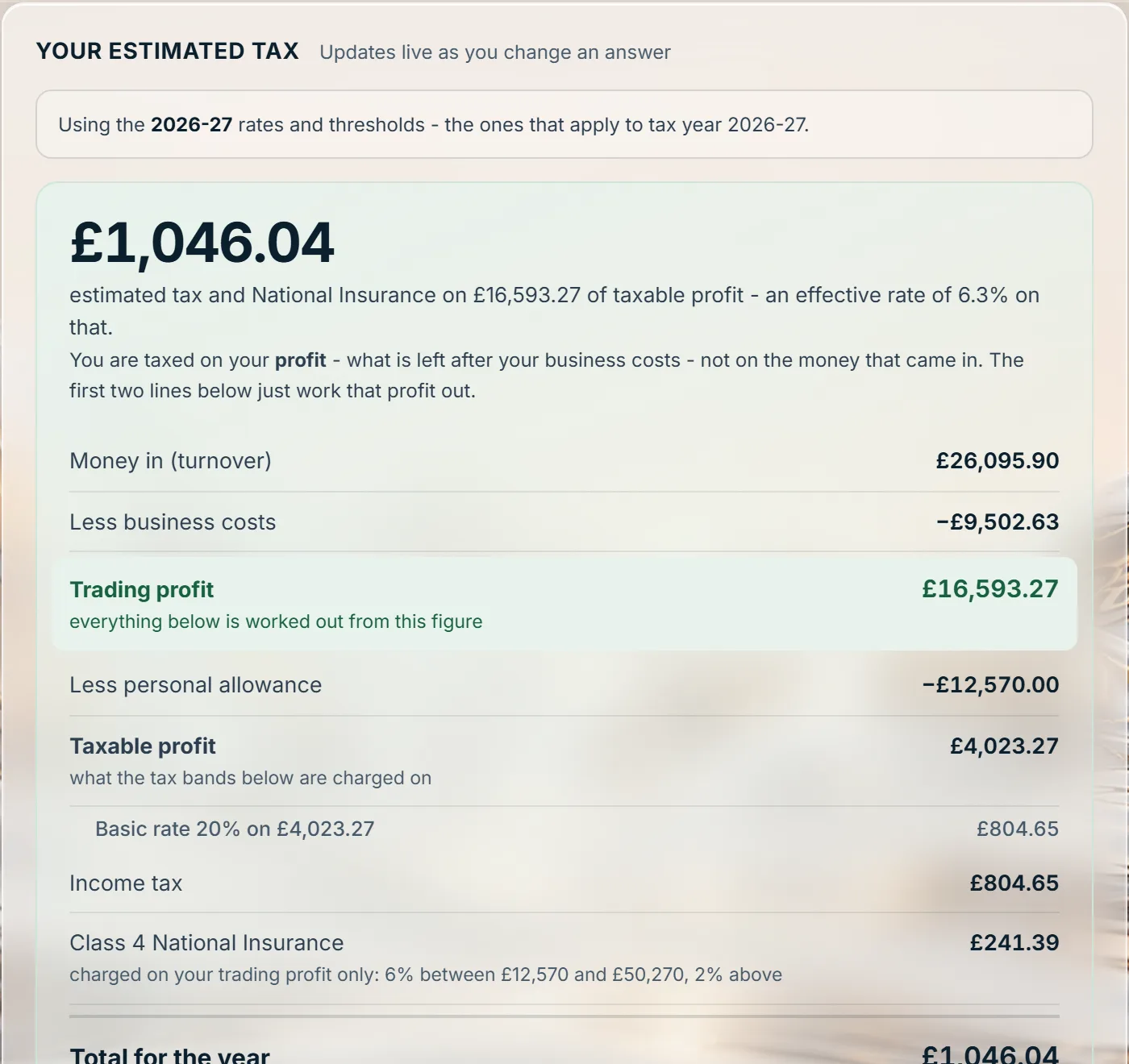
The tax calculation, in plain steps: income, costs, the profit, and the Income Tax and National Insurance on it
Easy Tax calculation · Sole trader sample book

Every deal and every gift, recorded once.

With the date, the value and the box on the return, and the tax worked out as you go.

Register interest

Be first when Stoneledger opens.

Tell us a little about your business and we’ll let you know as soon as it’s ready for you. Fields marked * are required.

Business type *

Book a demo

See Stoneledger on a book like yours.

Leave your details and a time that suits you, and we’ll be in touch to confirm it. Fields marked * are required.