On or before payday
Report each employee’s pay and deductions to HMRC in a Full Payment Submission, and give them a payslip, on or before the day they are paid.

Payroll
Once you employ someone, you run payroll: work out their tax and National Insurance, give them a payslip, and report it all to HMRC on or before the day they are paid. Here is what it asks of you in 2026 to 2027, and what Stoneledger does about it.
What it asks of you
Report each employee’s pay and deductions to HMRC in a Full Payment Submission, and give them a payslip, on or before the day they are paid.
Send an Employer Payment Summary by the 19th after the tax month if you are claiming something back, such as statutory pay, or if you paid nobody that month. A tax month starts on the 6th.
Pay HMRC what the month’s payroll owes by the 22nd, or by the 19th if you pay by post. Paying late can bring a penalty.
HMRC sets it out in its guide to running payroll.
In 2026 to 2027
15% on each employee’s earnings above £5,000 a year, paid by you on top of their pay.
8% of their earnings between £12,570 and £50,270 a year, and 2% above, taken from their pay with their Income Tax.
Up to £10,500 a year off your employer’s National Insurance, claimed through your payroll. Not for a company whose one director is its only employee paid above the threshold.
Every rate and threshold is in HMRC’s rates and thresholds for employers 2026 to 2027.
What Stoneledger does
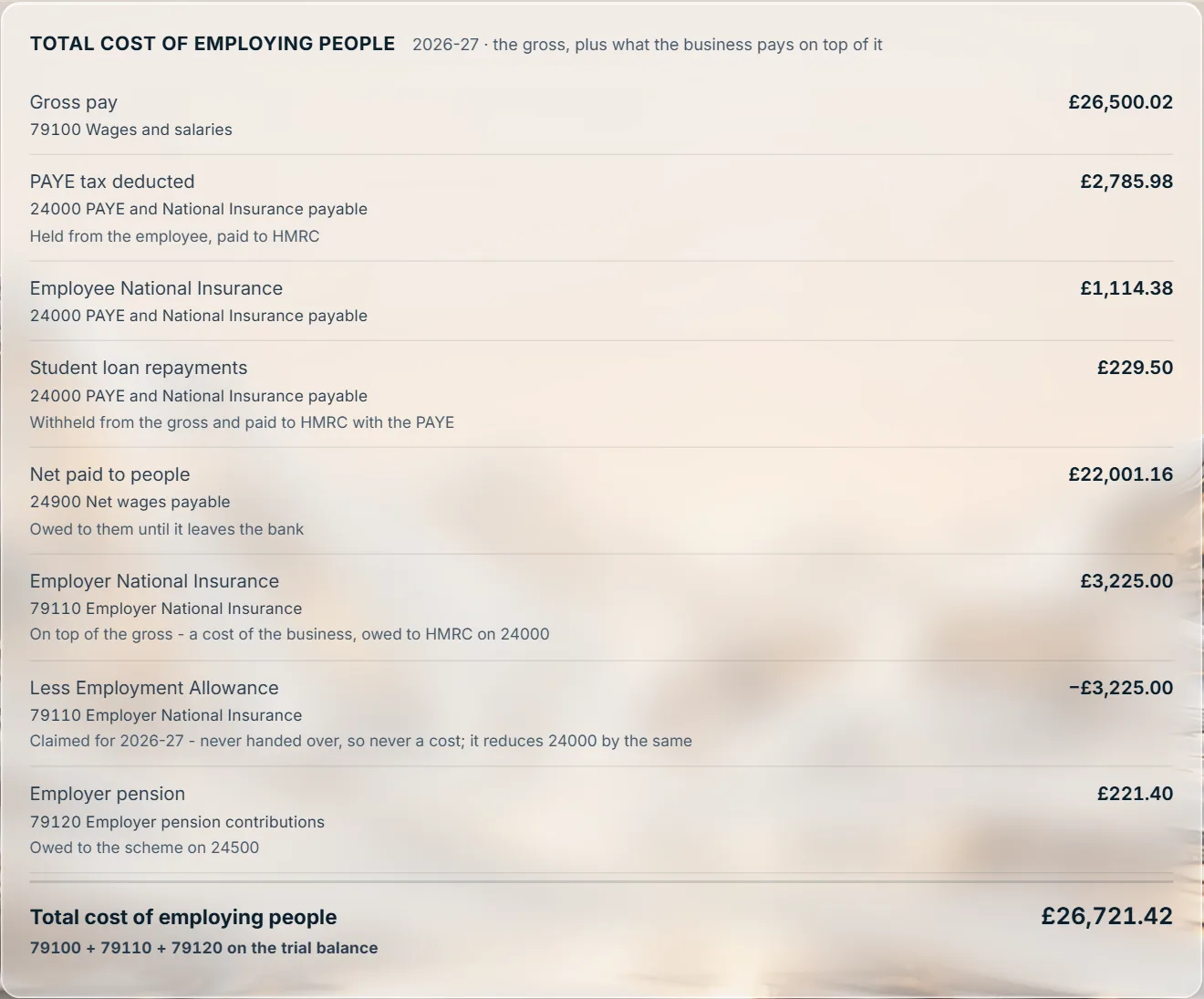
What it costs
One plan, with everything in it: the books, payroll, VAT, CIS, your Self Assessment or Corporation Tax and journals. No charge for each person on the payroll. 30 days free, no card needed. How that compares
Stoneledger runs the payroll in the same books as the rest of the business, works out what each person costs and what is owed by when, and every number opens onto the working behind it.