A nil return
A monthly return showing your payments to subcontractors were nil. It is due by the 19th after the tax month ends, like any other return, and it covers that one month.

CIS nil returns
A contractor's CIS return is due by the 19th after every tax month, including a month in which no subcontractor was paid. For that month you send a nil return, showing nothing paid, or tell HMRC you have stopped using subcontractors for now. Here is when each applies, and what a late one costs, from HMRC's own guidance.
Two ways to tell HMRC
A monthly return showing your payments to subcontractors were nil. It is due by the 19th after the tax month ends, like any other return, and it covers that one month.
If you have stopped using subcontractors for now, tell HMRC: through the CIS online service with a nil return, or by phone or post. It lasts up to six months, and you can renew it at the end.
The month you pay a subcontractor again, you file a return with the payments on it, and that ends the inactivity period. From then on a return is due every month again.
If neither reaches HMRC
A return a day late costs £100, two months late another £200, and at six and at twelve months the higher of £300 or 5% of the deductions on it. With nothing deducted, that is £300 each time. Work out a late return's penalty.
Every month is its own return with its own penalties, so a quiet quarter with nothing sent is three late returns, each counted from the day it was due.
If you have stopped using subcontractors altogether, tell HMRC, and the monthly returns stop. A deemed contractor that does not expect to make construction payments for a while can ask HMRC for a longer inactivity period.
HMRC sets it out in file your monthly returns and telling HMRC about changes. A business that does not build can be a contractor too: deemed contractors.
What Stoneledger does
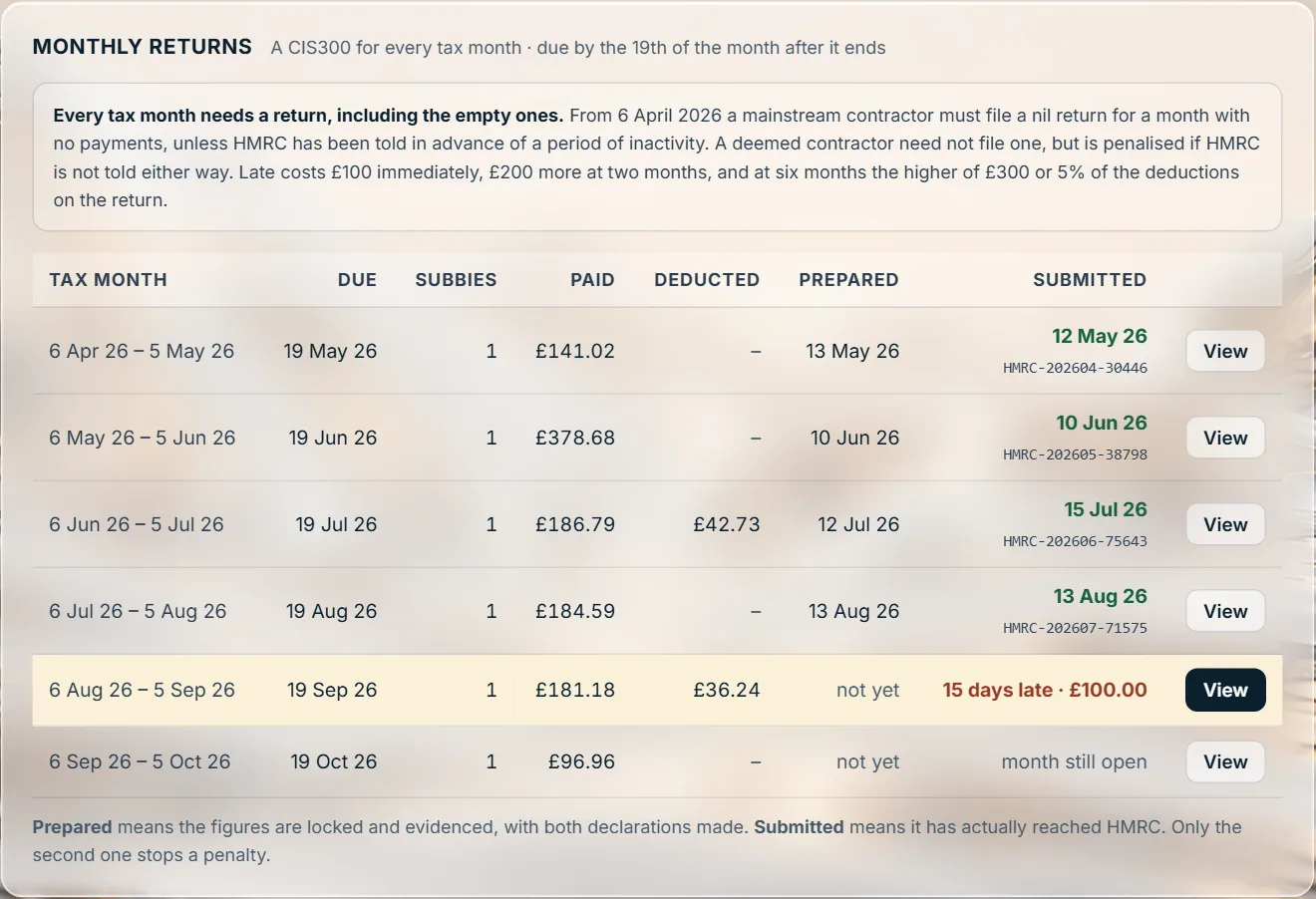
Each tax month with its due date, and nothing marked as sent until it has really gone.