The FPS, as usual
The company's Full Payment Submission goes in as normal, on or before each payday.

CIS for limited companies
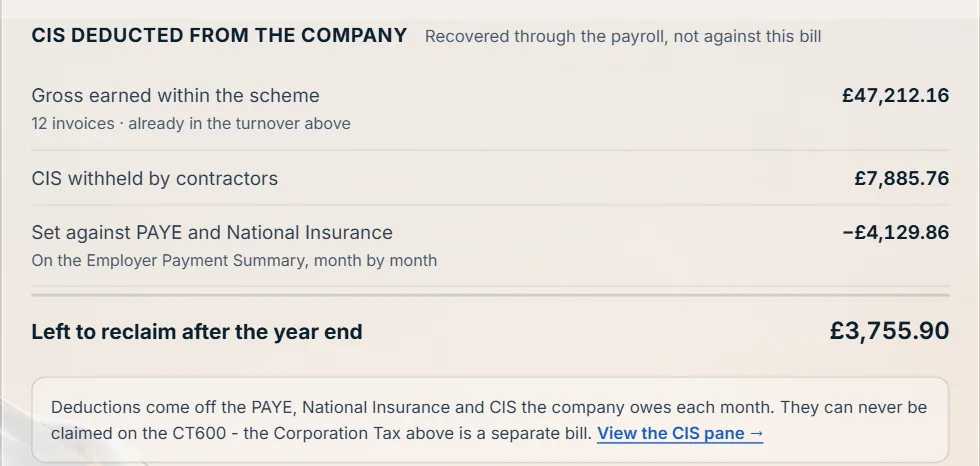
A sole trader claims CIS back on a tax return. A limited company does not: it sets the deductions against the PAYE and National Insurance it owes each month, through its payroll, and claims back what is left after the tax year ends. Here is how, from HMRC's guidance.
Through the payroll
The company's Full Payment Submission goes in as normal, on or before each payday.
At the same time, send an Employer Payment Summary showing the CIS deductions taken off the company for the year to date. HMRC takes them off what you owe, and you pay the balance by the usual date.
If there are deductions left after paying your tax, carry them forward to the next period in the same tax year, and tell HMRC in the EPS that you have nothing to pay.
After the tax year
Deductions still left over after the end of the tax year are claimed back from HMRC as a refund.
Do not use the company's Corporation Tax return to pay tax with your CIS deductions. HMRC says you may get a penalty if you do.
Keep a record of the deductions used against each monthly or quarterly PAYE bill - form CIS132 is one way - and keep every payment and deduction statement from your contractors.
HMRC's guidance: Pay tax and claim back deductions. For a sole trader or partner it is the tax return instead - see CIS, both sides.
What Stoneledger does
The deductions, the payroll they are set against, and the year's accounts, kept together so they always agree.